Not all wedding videographers are created equal. Before you book anyone, read this in-depth guide covering the five styles of wedding film, the seven questions every couple must ask, red flags to avoid, pricing explained in plain language, and how to tell a true cinematic storyteller from a hobbyist with a camera.
Your wedding film is the one keepsake that lets you relive the day in motion — the tremor in a voice, the laughter of a parent, the way your partner looked at you when no one else was watching. Choosing the person who will create that film is one of the most important decisions of your entire engagement, and yet it is the decision most couples make on instinct after watching a single highlight reel. We want to give you more than instinct. We want to give you a framework.
At Michael Francis Zeiss, we have spent more than three decades behind cinema cameras at weddings across Ontario, and in that time we have seen every style, every budget, and every promise the industry has to offer. This guide distills what we have learned into a practical, honest resource so that — whether you ultimately book with us or with someone else — you do so with your eyes wide open.
The Five Styles of Wedding Film
Before you compare videographers, you need to understand the vocabulary of the craft. "Wedding videography" is not one thing; it is a family of distinct approaches, and the style you fall in love with should dictate the artist you hire.
1. The Documentary Film. This is the unhurried, fly-on-the-wall approach. There are no staged moments, no direction, no do-overs. The filmmaker captures the day exactly as it unfolds and edits it into a long-form record — often a feature film of thirty to ninety minutes. It is ideal for couples who want an honest, complete archive and who value authenticity over polish.
2. The Cinematic Highlight Film. This is the style we are most known for. A three- to eight-minute film, color-graded and scored like a short movie, built from the most emotionally charged moments of the day. It is distilled rather than exhaustive. Every frame is chosen for a reason. This is the film you will watch on your anniversary every year.
3. The Social Content Edit. A newer format designed for the way couples share today: short, vertical, same-day or next-day edits filmed largely on a high-end mobile device. It is not a replacement for a true wedding film; it is a complement — a way to share the energy of the day with friends and family before the full film is even delivered.
4. The Traditional Film. The classic full-length video with ceremony and toasts covered start to finish, edited linearly. It is thorough and predictable. Many couples who want a complete record of the ceremony and speeches lean toward this, often combined with a shorter highlight film.
5. The Fine-Art or Editorial Film. A highly stylized, art-directed approach that borrows from fashion and cinema. It is composed, deliberate, and visually opulent. This is where Super 8, film emulation, and dramatic color grading live.
The single most common mistake couples make is admiring one style and then hiring a filmmaker whose instinct belongs to another. Look at a prospective videographer's full portfolio, not their best reel, and ask yourself whether the work you see consistently feels the way you want your own film to feel.
The Seven Questions Every Couple Must Ask
A consultation is not a sales call — it is an interview. Bring these questions, and listen carefully to the answers.
1. "Who, exactly, will be filming my wedding?" Many studios sell the brand but send a subcontractor. You are not hiring a logo; you are hiring a person with a particular eye. Get the lead filmmaker's name in writing, and ask to see films they personally shot and edited.
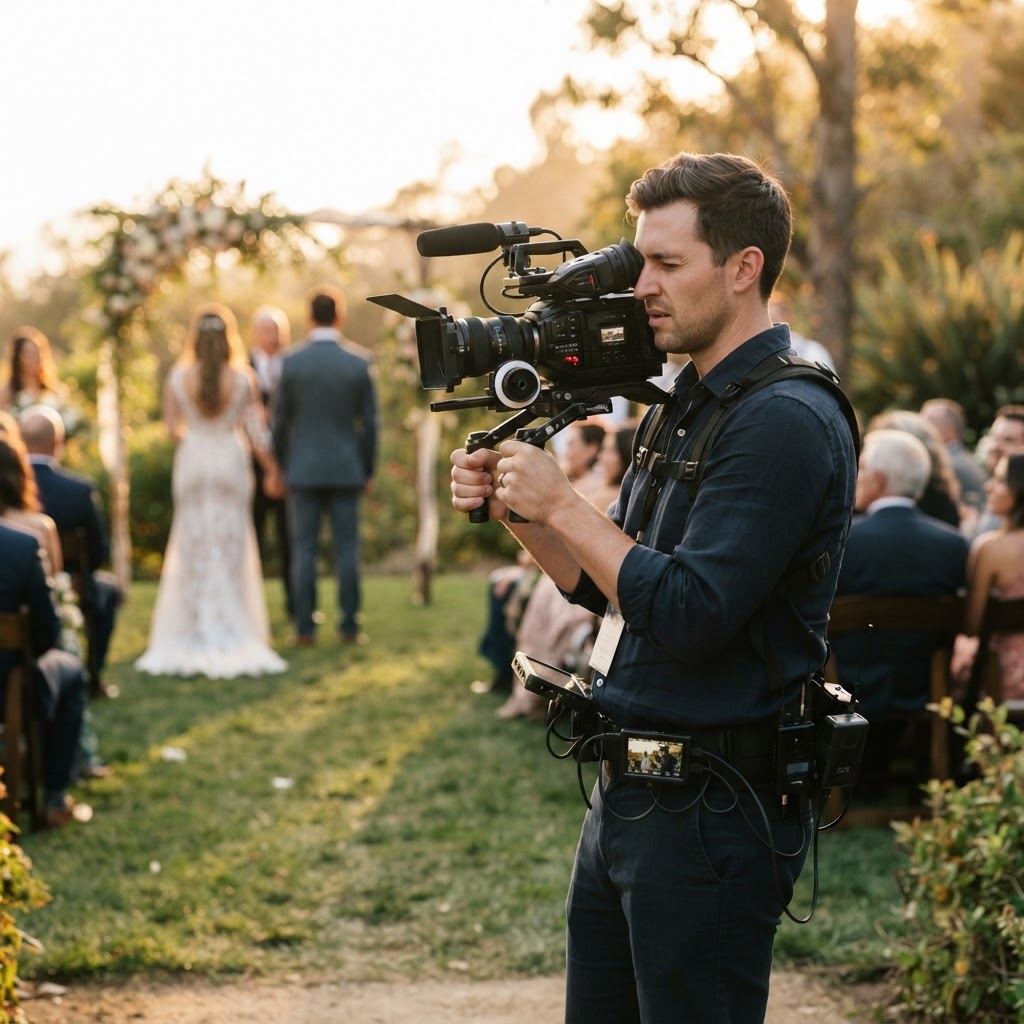
2. "How do you capture audio?" A wedding film without clean audio is just a slideshow with music. Ask about wireless lavaliere microphones, ceremony audio backups, and how vows and toasts are recorded. The answer tells you immediately whether the filmmaker is a professional or a hobbyist.
3. "What is your delivery timeline?" Six to twelve weeks for a highlight film is industry standard. Be wary of anyone promising same-week delivery of a full cinematic edit, and equally wary of anyone who cannot commit to a timeline at all.
4. "How do you work alongside our photographer?" The friction between photographer and videographer is the single most common cause of a stressful wedding day. A great videographer will tell you, unprompted, how they coordinate — sharing shot lists, dividing the timeline, and never competing for the couple's attention.
5. "What happens if equipment fails or a filmmaker is ill?" Professional teams carry redundant camera bodies, audio recorders, and batteries, and they have a bench of trusted colleagues for emergencies. A vague answer here is a red flag.
6. "Can we see a complete, long-form film — not just highlights?" Anyone can assemble two minutes of their best footage. A full film reveals pacing, storytelling, and consistency. If a videographer will only show you a highlight reel, you are seeing their marketing, not their craft.
7. "What is included in the final delivery, and what costs extra?" Raw footage, a teaser, a highlight film, a feature film, online gallery hosting, USB drives, albums — every studio packages these differently. Understand exactly what you receive for the price quoted, and what would add to the cost.
Red Flags to Avoid
Some warning signs are subtle. Others are not.
A filmmaker who cannot show you a single complete film. A contract that does not specify delivery timelines or what is included. A portfolio composed entirely of slow-motion, music-driven montages with no dialogue — which suggests they may struggle to build a film around the real sound of your day. A price so low it cannot cover the cost of professional equipment, insurance, and a living wage — because something is being cut, and it is usually experience or backup gear. And finally, a filmmaker who talks only about themselves and never asks about you. The best wedding films are built on the story of the couple, and a filmmaker who is not curious about your story will not be able to tell it.
Understanding Pricing
In Ontario, a professional wedding videographer typically charges between $2,500 and $10,000 depending on coverage hours, the number of filmmakers, drone work, and deliverables. A single filmmaker for a half day might begin around $1,500; a full two-person cinema team with a feature film and album can reach well into five figures. The price is driven by three things: the team's time on the day, their time in the edit (which is often three to five times the filming hours), and the deliverables you receive.
The most important thing to understand is that you are not paying for hours of coverage — you are paying for a finished film. A videographer who charges more but delivers a film that makes you weep every time you watch it is offering more value than one who charges less and delivers something you never reopen.
A Final Word
Your wedding film is the only keepsake that moves and speaks. Long after the flowers have dried and the cake has been eaten, it is what will bring the day back. Choose a filmmaker whose work moves you, whose process you trust, and whose presence you welcome on the most intimate day of your life. That is the only checklist that truly matters — and these questions simply help you find them.